
You pull the starter for the tenth time, the engine barely coughs, then nothing. The gas-powered auger remains silent. Before suspecting a serious malfunction, know that most starting refusals come from three simple circuits: fuel, ignition, and priming. Identifying the correct circuit from the start avoids unnecessary disassembly.
Switch and safety circuit: the diagnosis that is often forgotten
The usual reflex is to check the spark plug or the fuel level. This makes sense, but it is incomplete. According to the Champion manual for model 200940, the stop switch and the position of the controls are part of the pre-start checks.
Specifically, if the switch is left in the “off” position or if the control lever is not in the correct position, the engine will receive no spark. Ignition and fuel may be perfect, but the auger will not start. Therefore, always check the position of the start switch before any other manipulation.
On some models, a cable connects the kill switch to the handlebar. A loose or stuck wire keeps the circuit open at all times. A simple visual check of this cable can solve the problem in seconds. A document detailing the engine manual and starting refusal for a Ribimex model illustrates this elimination diagnosis logic, from the simplest to the most technical.
Dirty or wet spark plug: recognizing the symptoms
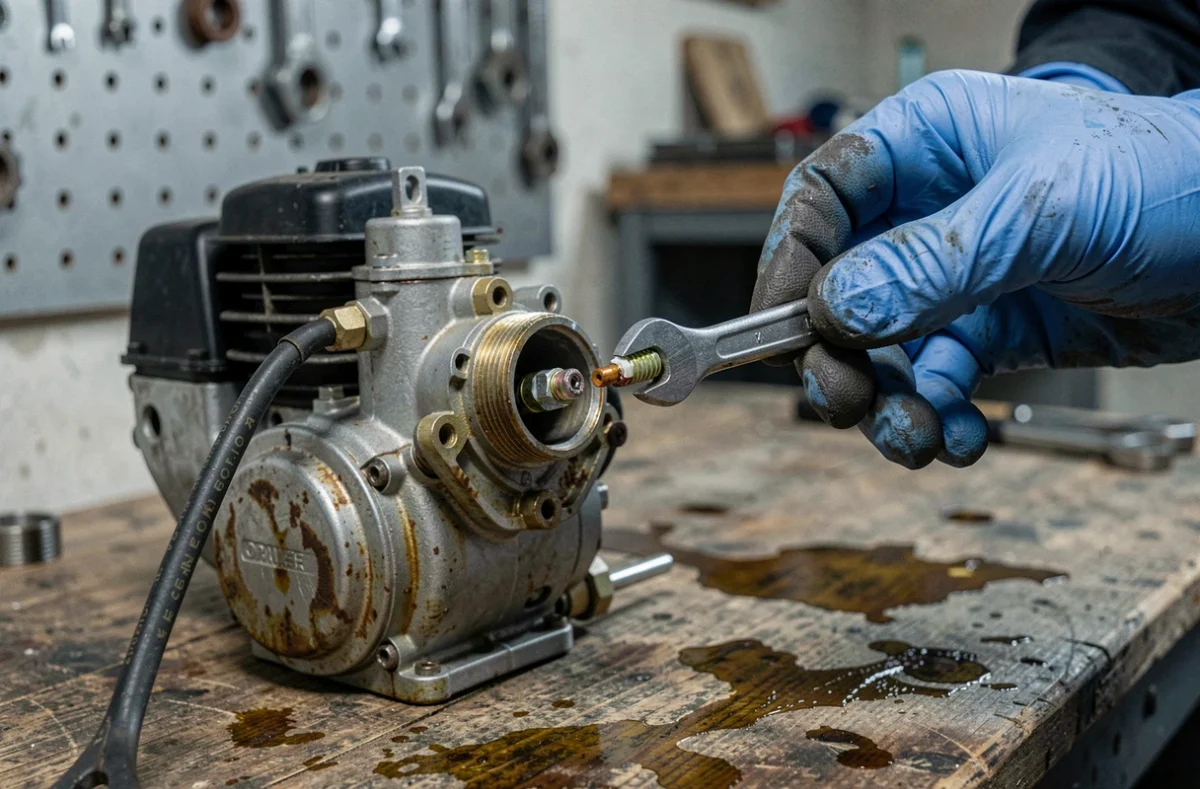
The spark plug is the most commonly blamed part, and for good reason. It directly suffers from the consequences of a poor air-fuel mixture. Have you ever noticed a black, greasy deposit on the electrode after disassembly? This is a sign of a mixture that is too rich in fuel.
Two common situations cause this problem:
- The choke has been left closed too long after the first attempts, enriching the mixture and flooding the engine. The spark plug becomes wet, unable to produce a spark.
- The priming bulb has been pressed an excessive number of times. A few presses are enough to fill the circuit; beyond that, the fuel saturates the combustion chamber.
- The air filter is clogged with dust, reducing air intake and skewing the mixture towards an excess of fuel.
To check, unscrew the spark plug with the provided wrench. If the electrode is wet with fuel, wipe it with a dry cloth, let the chamber ventilate for a few minutes, then reassemble. If the deposit is hard and carbonized, clean the electrode with a fine wire brush or replace the spark plug.
A detail often overlooked: the gap between the two electrodes. If too tight, the spark is weak. If too wide, it does not occur. Check your model’s manual for the exact gap recommended by the manufacturer.
Expired fuel and clogged carburetor: the silent failure
Gasoline does not have an unlimited shelf life. After a few weeks of storage in the tank, it begins to oxidize. Expired fuel forms deposits that clog the carburetor. The engine then receives too little fuel, or a lean mixture that does not ignite properly.
Why is this problem so common with augers? Because this tool is used occasionally, sometimes once or twice a season. Between uses, the gasoline stagnates. The typical symptom: the engine starts briefly then stalls, or it does not start at all despite a clean spark plug and a switch in the correct position.
Drain and clean the fuel circuit
Start by emptying the tank. Dispose of the old fuel at an appropriate collection point, never in nature. Then fill with fresh gasoline mixed with two-stroke oil in the proportions indicated by the manufacturer.
If the engine still refuses to start after this draining, the carburetor is likely clogged. On most gas-powered augers, it is accessible by removing the air filter cover. Clean the carburetor with a dedicated product by spraying into the inlet and outlet openings. The jets, which are very small in diameter, easily clog with residues from aged gasoline.

Preventive maintenance of the engine: avoiding recurring failures
Repairing a starting refusal addresses the symptom. A few simple habits can prevent the problem from recurring at the start of each season.
- Before long-term storage, empty the tank and run the engine until it stops completely to purge the circuit. This keeps the carburetor clean.
- Replace the air filter at least once a year, or clean it after each intensive use. A clogged filter alters the air-fuel ratio and accelerates the fouling of the spark plug.
- Check the level and quality of the engine oil if your auger has a separate crankcase. Insufficient lubrication causes internal seizing that blocks the starter.
- Inspect the starter cable itself. A frayed cable or a tired return spring gives the impression that the engine is not starting, when the problem is purely mechanical.
Regular maintenance takes about twenty minutes. It extends the engine’s lifespan and ensures a reliable start from the first pulls.
When to call a repairman
If after checking the switch, replacing the spark plug, draining the fuel, and cleaning the carburetor, the engine still refuses to start, the problem is likely with the internal ignition. The flywheel or ignition coil may be faulty. These parts require diagnostic tools and specific expertise. Entrusting the auger to a mechanic specialized in small gas equipment is then the most reasonable solution.
The refusal to start a gas-powered auger almost always follows the same pattern: a simple detail that has not been checked. Safety circuit, spark plug, fuel, carburetor – four areas to check in this order. The elimination diagnosis remains the fastest method to get a functional engine without unnecessary disassembly.