
The plane tree mulberry, a hybrid valued for its generous shade and rapid growth, requires specific maintenance to thrive. Gardeners must be familiar with appropriate pruning techniques, which vary according to the age and shape of the tree. This fundamental operation allows for the control of its development and ensures a dense foliage production. It is essential to know the right time to prune, thus avoiding disruption during the flowering or fruiting period. Regular and methodical maintenance guarantees the health and longevity of the plane tree mulberry while preserving its aesthetics.
The basics of maintaining the plane tree mulberry
How to care for a plane tree mulberry in your garden? This question deserves a detailed answer, as the plane tree mulberry, also known as Morus kagayamae or Morus bombycis, is a tree that combines decoration and utility. This small decorative tree, prized for the shade it provides and the vibrant display its leaves offer in autumn, requires special attention to remain healthy. The leaves, strikingly similar to those of the plane tree, also serve as food for silkworms, highlighting an economic utility of the tree in sericulture.
The fruits of the plane tree mulberry, although edible, are less appreciated for their taste and can be a source of inconvenience due to the stains they may create. Some cultivars of the tree are sterile and therefore do not produce fruit, which can be a wise choice for cleanliness-conscious gardeners. Choosing a sterile cultivar helps avoid the extra maintenance related to collecting fallen fruit.
Whether fruit-bearing or sterile, the plane tree mulberry can be affected by various diseases and pests such as scale insects, mites, cankers, or rust. Regular monitoring is necessary to quickly identify any signs of infestation or disease. Take preventive measures such as applying suitable phytosanitary treatments and removing infected parts to preserve the health of the tree.
Maintaining the plane tree mulberry includes adequate watering, especially during dry periods, as well as balanced fertilization to support the tree’s growth and the vibrancy of its foliage. Respect the periods of vegetative dormancy for any substantial intervention and ensure that the soil around the tree remains well-drained to avoid root suffocation. With proper care, the plane tree mulberry remains a major asset for any green space, combining aesthetics and functionality.
Optimal techniques and periods for pruning the plane tree mulberry
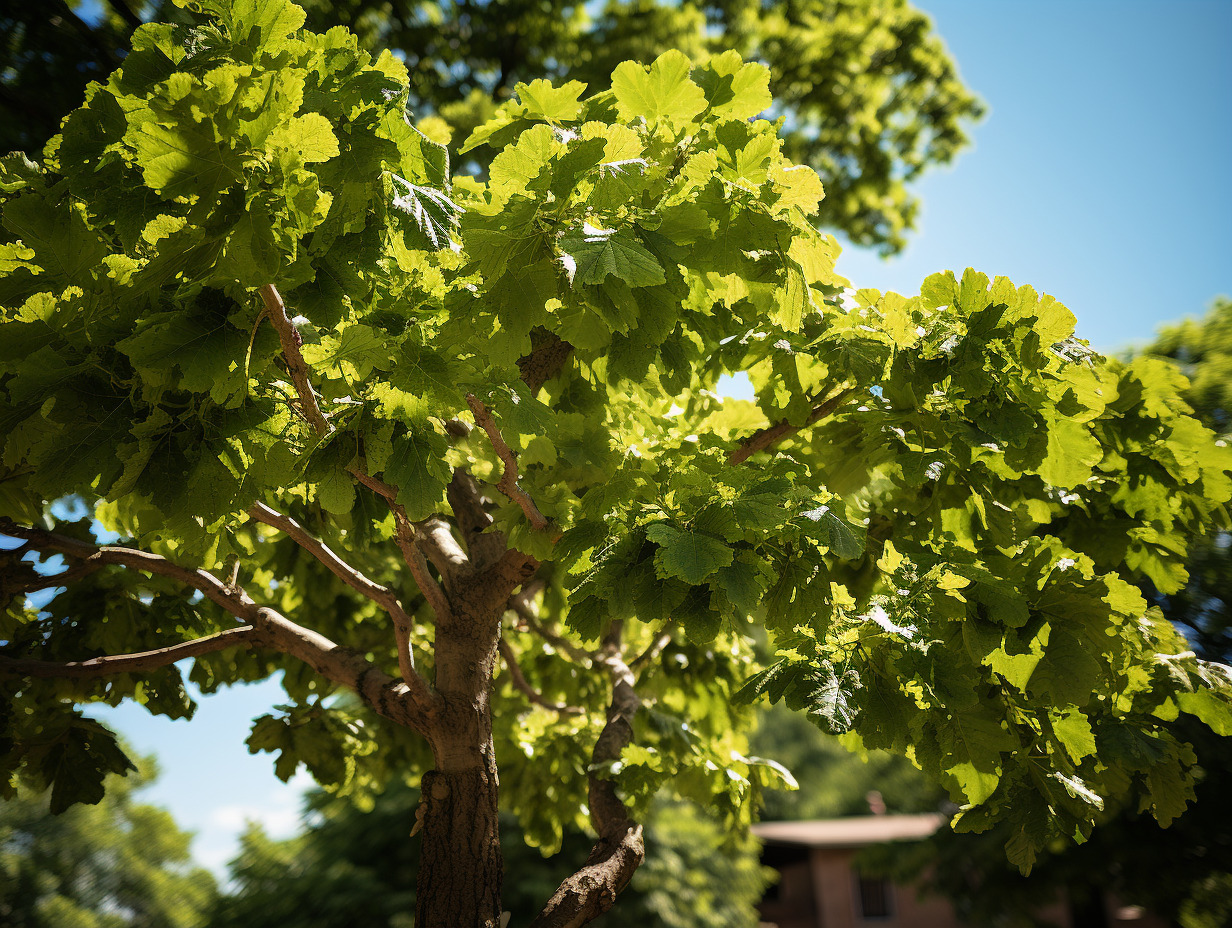
Pruning is a key step in managing a plane tree mulberry. It helps limit undesirable fruiting, especially in non-sterile varieties, and maintains the tree’s aesthetic shape. Experts recommend performing this operation at the end of winter or early spring, before the sap rises and the buds burst. This timing aims to minimize stress on the tree and promote quick healing of the cuts.
During pruning, the choice and maintenance of pruning tools such as saws and shears are crucial. These instruments must be perfectly sharpened and clean to ensure clean cuts and prevent the transmission of diseases. Prune while leaving a margin near the buds, ensuring no more than five buds are left on the branch to encourage harmonious growth.
The structural branches, these horizontal branches that shape the tree, should be preserved to maintain the tree’s form and the shade it provides. Proper pruning will encourage a parasol or arbor shape according to aesthetic and functional preferences. It is essential to respect the natural architecture of the plane tree mulberry to avoid compromising its vitality and future development.
For amateur gardeners, consulting a landscaper or a professional arborist remains a relevant option. These experts can provide personalized advice and carry out pruning in accordance with best practices, thus ensuring the health and longevity of your plane tree mulberry. Expert pruning often proves to be a wise investment in preserving the attractive appearance and robustness of this popular tree in gardens.