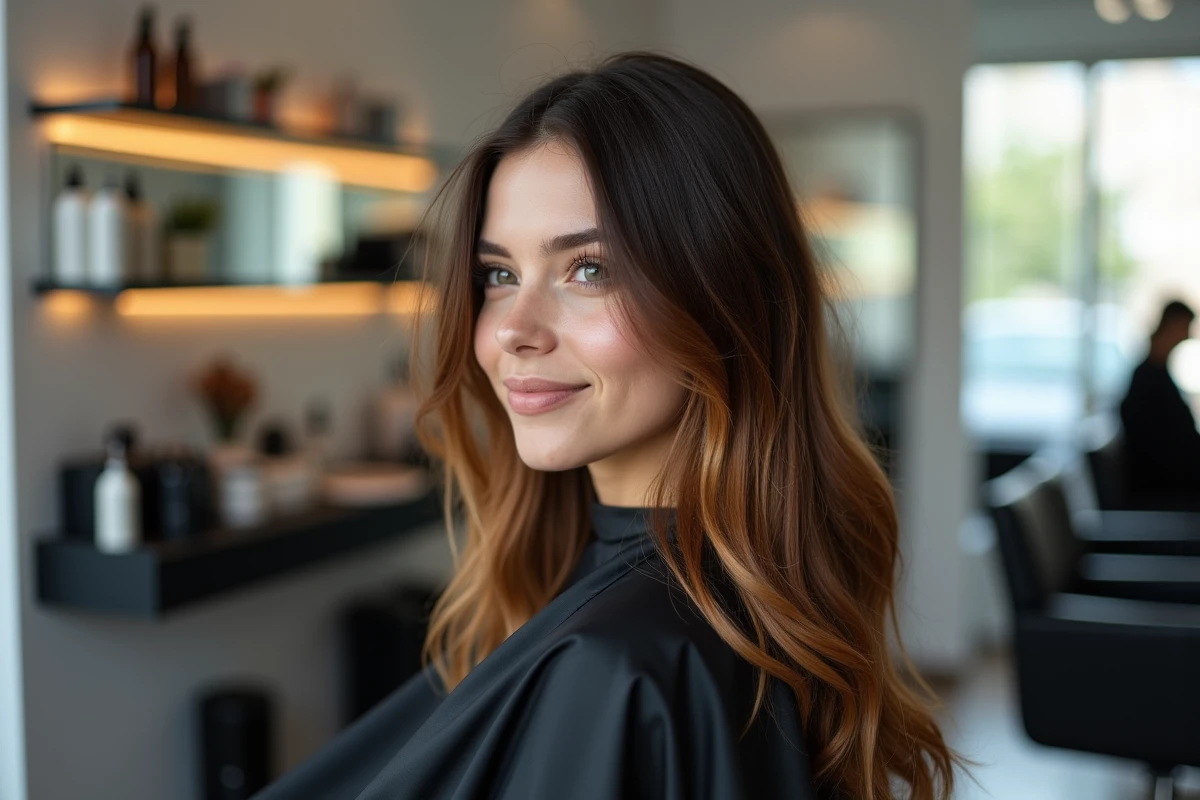
On a dark chestnut base, adding golden highlights without turning orange or creating a flat gradient remains the main point of friction. The result depends less on the chosen shade than on the placement of the strands, the volume of the oxidizing product, and the processing time, three parameters that are often underestimated when looking at inspiration photos on social media.
Oxidizer and dark chestnut hair: the overlooked parameter
The majority of tutorials talk about the final shade, rarely about the volume of oxidizer. On natural dark chestnut (level 3-4), we need to lighten enough for the caramel or honey pigment to take without turning dull copper. The usual reflex is to use a strong oxidizer to speed things up.
Recent salon protocols favor less concentrated oxidizers on already sensitized lengths, even if it means extending the processing time. This approach preserves the fiber and gives a brighter result at the regrowth, because the cuticle is not burned by an overly aggressive product.
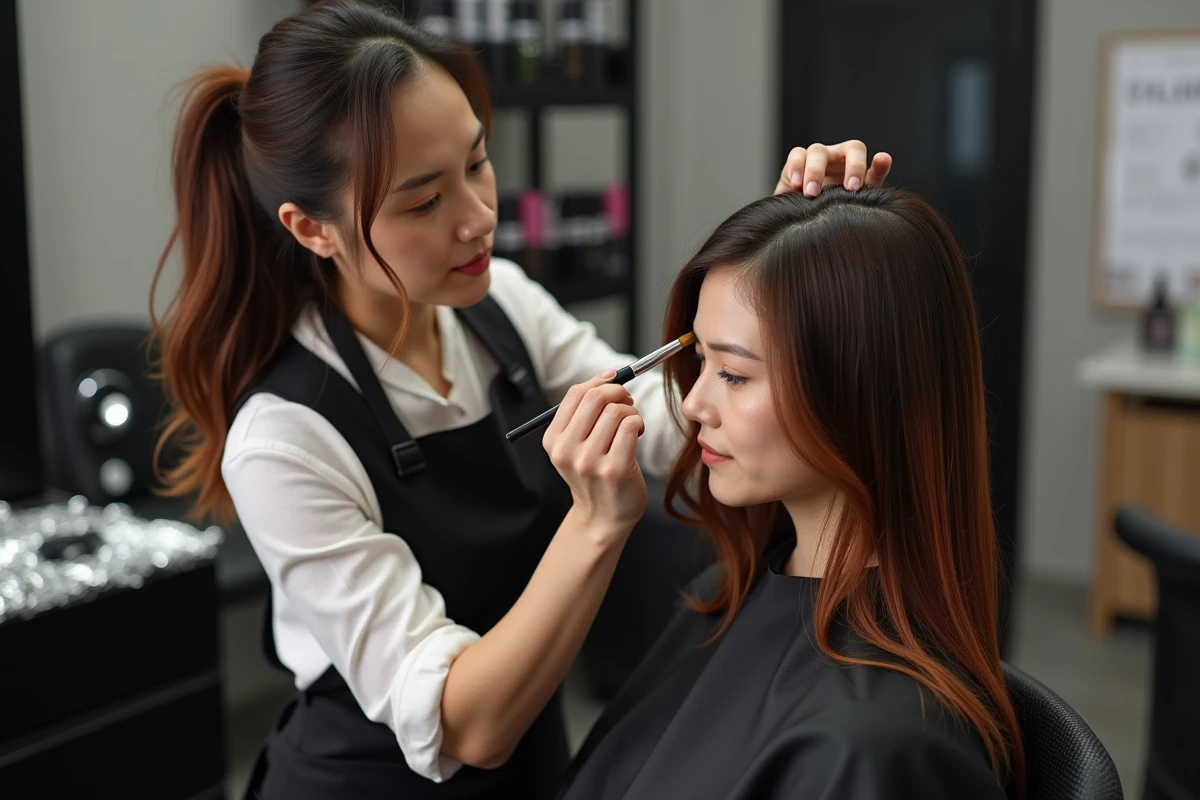
When creating caramel and honey highlights on dark chestnut hair, going through an orange bleaching base is normal. Panicking and rinsing too early gives a coppery reflection instead of a warm gold. Allowing the product to work until the yellow-orange base allows the caramel or honey pigment to deposit correctly.
For lengths that have already undergone coloring or smoothing, a reduced volume oxidizer applied in two steps (roots, then lengths) limits damage. This results in a more uniform reflection throughout the strand.
Placement of caramel and honey highlights: face framing or overall balayage
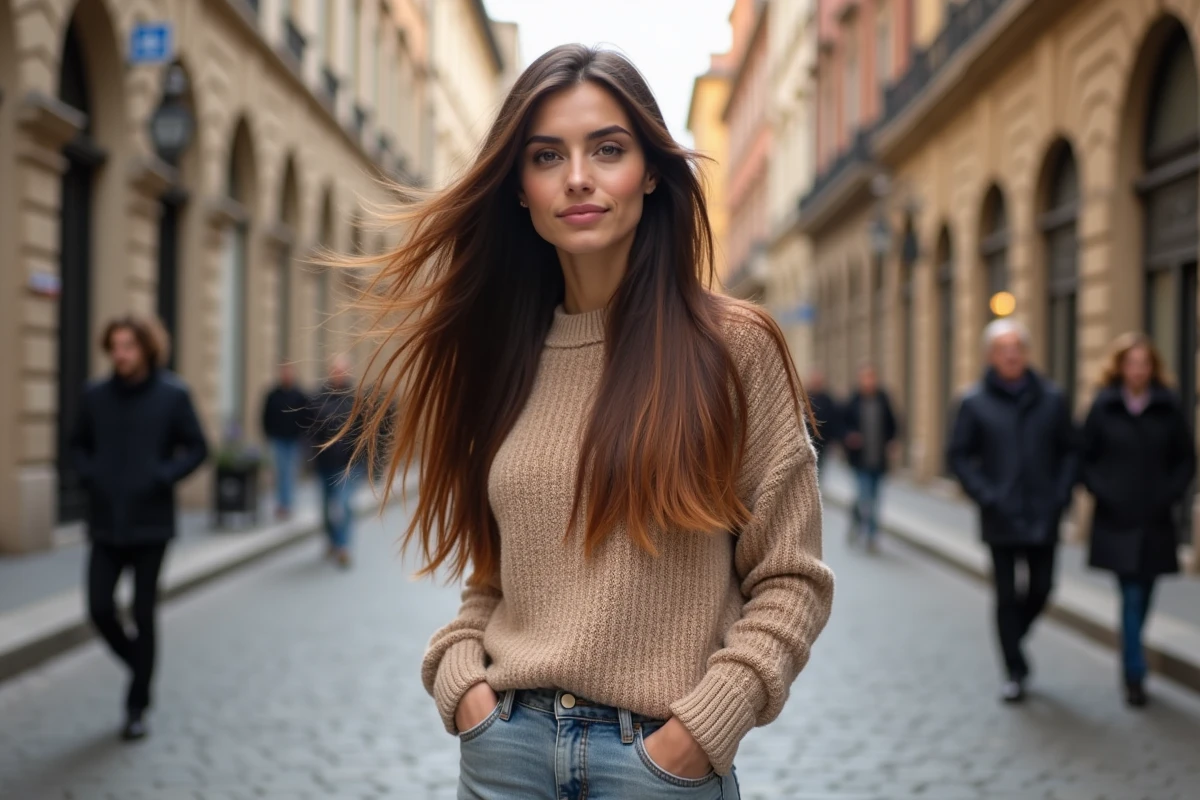
In recent years, the demand has clearly shifted towards more visible contrasts on brown and dark chestnut bases, with a placement concentrated around the face. Face framing (two strands framing the face, lighter than the rest) creates an immediate luminous effect without touching the bulk of the hair.
Face framing alone or combined
Face framing alone is suitable when a subtle change is desired. On dark chestnut, two honey strands on each side of the face are enough to warm the complexion. The contrast is sharp, the regrowth is less visible, and maintenance is minimal.
Combining face framing and caramel balayage on the lengths gives a more dimensional result. The lightest strands (honey) are placed at the front, the deeper ones (caramel) on the lengths and nape. This gradient of warm tones avoids a block effect and adds movement, especially on textured or wavy cuts.
Thickness and spacing of the strands
On dark hair, strands that are too fine and too close together produce a “grid” effect as they grow out. Wider strands, spaced irregularly, mimic the way the sun naturally lightens hair. We work in sections of varying widths to break the regularity.
Three points to check before starting the placement:
- The thickness of the strands around the face should remain finer than on the lengths; otherwise, face framing flattens the features instead of illuminating them.
- On the nape and lower layers, space the caramel strands further apart to maintain depth in the base color.
- The tips often receive too much product due to the accumulation from previous applications, which dries them out. It’s better to saturate them with care before application.
Difference between caramel and honey: choosing based on skin undertone
Caramel leans towards golden brown, with a slightly reddish component. Honey is more yellow-gold, almost warm blonde. On a dark chestnut base, both complement each other well, but the dosage depends on the skin undertone.
A warm undertone (greenish veins on the wrist) pairs better with a caramel dominance, which extends the natural warmth of the complexion. A cool or neutral undertone (bluish veins) benefits from more honey, which brings light without emphasizing redness.
Feedback varies on this point among colorists, but a practical rule works: if in doubt, start with caramel on the lengths and reserve honey only for face framing. The contrast remains subtle, and honey can be intensified during the next touch-up without risking a too-light shift.
Maintenance of golden highlights on dark chestnut hair
Golden pigments oxidize quickly, especially in sunlight and under the effect of stripping shampoos. We lose brightness within the first few weeks if the routine is not adapted.
Two actions make a difference:
- Use a sulfate-free shampoo to avoid stripping the deposited pigments. Gentle formulas slow down the shift to dullness.
- Apply a golden pigment care (mask or conditioner) once a week to revive the shine between salon appointments.
- Protect the lengths with an anti-UV spray during exposure months, because the sun lightens honey strands faster than caramel and creates an unsightly tone gap.
The frequency of touch-ups depends on the type of placement. A well-blended balayage on dark chestnut lasts easily three to four months before losing its clarity. A more contrasted face framing requires a slightly closer touch-up, as regrowth on the front strands is the most visible.
The last concrete trap to anticipate: heating tools accelerate the loss of highlights. A curling iron or straightener used without thermal protection oxidizes the golden pigments on the surface. Reducing the temperature and applying a protector before each styling extends the hold of caramel and honey highlights by several weeks.