Tommy Hilfiger manufactures almost all of its collections outside the United States. The brand, owned by the PVH Corp group, whose operational headquarters is located in Amsterdam, relies on a network of subcontractors spread across Southeast Asia, the Indian subcontinent, and, to a lesser extent, some North African countries. Understanding this production geography allows for a proper reading of a label and an assessment of the consistency of the CSR commitments displayed in stores.
Textile Traceability and QR Codes on Tommy Hilfiger Labels
The brand has integrated QR codes on the majority of its labels to allow consumers to trace back to the exact origin of the fabrics. This initiative directly responds to European regulatory pressure for supply chain transparency.
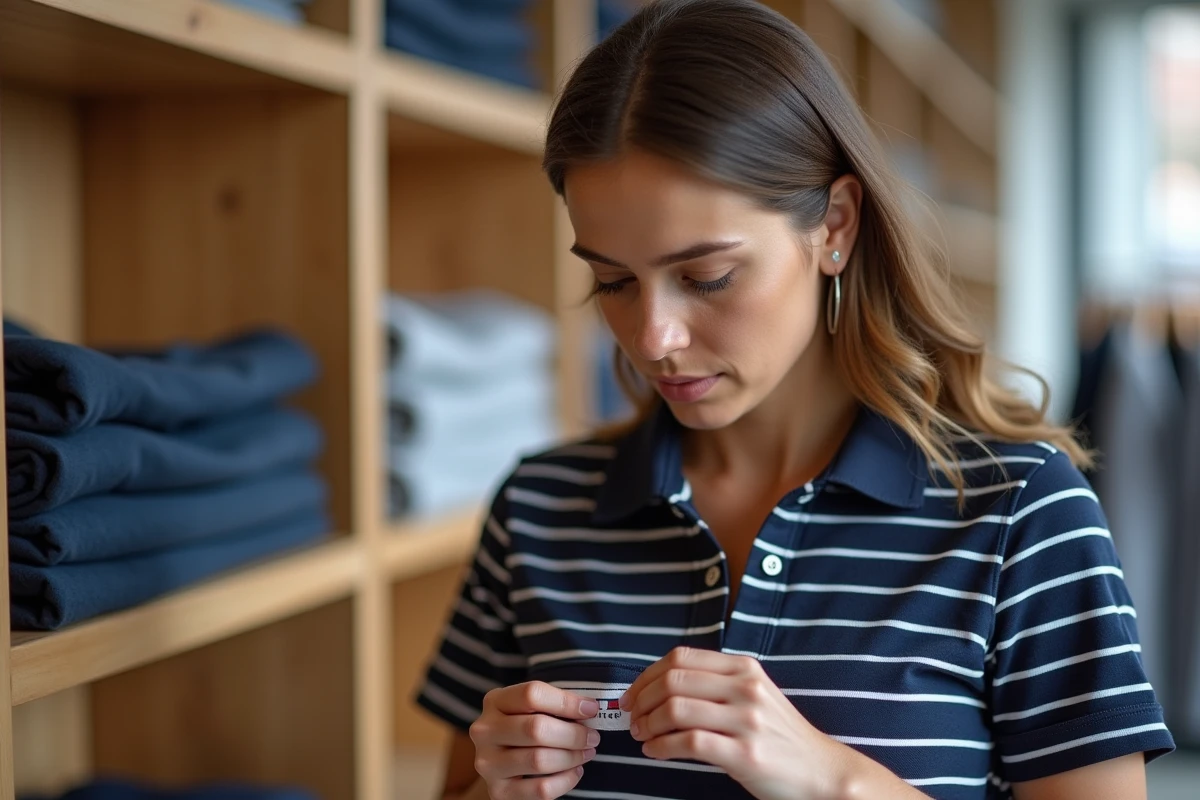
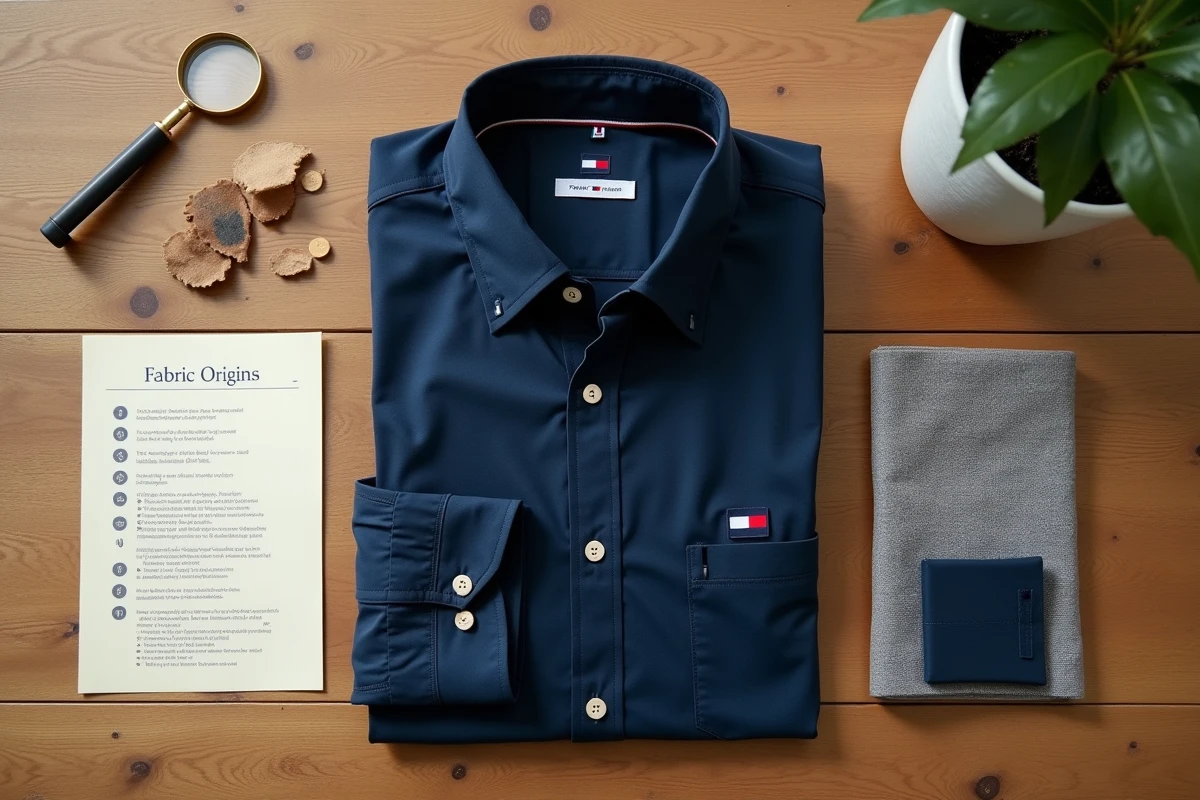
The regulation (EU) 2024/825 mandates since January 2025 the mandatory indication of the final manufacturing country on all clothing sold in Europe. Tommy Hilfiger had to adapt its labels for all its French stores, including the one in Nantes. By scanning the QR code, one can access information about the manufacturing site, the type of fiber, and sometimes the fabric supplier.
We observe that this system remains partial. The QR code provides information about the final assembly country, rarely about the intermediate steps (spinning, dyeing, finishing). For a polo shirt whose cotton is spun in India, dyed in Bangladesh, and assembled in Vietnam, only the last step appears on the regulatory label. An article detailing the manufacturing country of Tommy Hilfiger according to Les P’tits Bonheurs in Nantes helps to better understand these geographical nuances.
Manufacturing Countries of Tommy Hilfiger: India, Vietnam, and Bangladesh at the Forefront
Since 2023, PVH Corp has accelerated production in India and Vietnam, particularly for children’s lines. The annual PVH report published on February 27, 2026, confirms this shift towards Southeast Asia to reduce production costs.
Bangladesh remains a major supplier for knitwear and shirts. Vietnam focuses more on technical items (down jackets, windbreakers). Finally, India supplies an increasing share of cotton collections, thanks to direct access to the raw material.
Distribution by Product Category
- Knitwear and jerseys (t-shirts, polos, sweatshirts): mostly made in Bangladesh and India, where labor costs for cutting and sewing operations remain competitive.
- Outerwear and technical pieces (down jackets, jackets): production concentrated in Vietnam, a country known for its expertise in complex assemblies with linings and membranes.
- Denim and chinos: distributed between Bangladesh, Turkey, and occasionally Egypt for certain premium references.
- Textile accessories (scarves, caps): often made in China, where volumes allow for low unit prices on low-value-added items.
This distribution is not fixed. PVH adjusts its allocations based on trade agreements, currency fluctuations, and social audits. The same model can change its manufacturing country from one season to the next, making label reading even more useful.
Social Audits and Working Conditions in Tommy Hilfiger Factories
The issue of working conditions remains a point of friction. Independent audits reported by the Clean Clothes Campaign in its “Fashion Accountability 2025” report indicate a significant increase in worker complaints in Bangladeshi factories supplying Tommy Hilfiger since 2024.
Partial improvements have been observed through partnerships with the International Labour Organization (ILO). These programs focus on limiting overtime, providing access to complaint mechanisms, and verifying local minimum wages.
The brand publishes a partial list of its tier 1 suppliers (final assembly), but not tier 2 (dyeing, weaving) or tier 3 (spinning). This opacity regarding intermediate levels limits the actual scope of the traceability displayed via QR codes.
What a Tier 1 Audit Actually Covers
A tier 1 audit checks the conditions in the factory that sews the garment. It says nothing about the workshop that dyed the fabric three months earlier in another country. For a brand whose supply chain sometimes crosses four or five countries before final assembly, this distinction is far from trivial.
In-Store Labeling in Nantes: What to Check
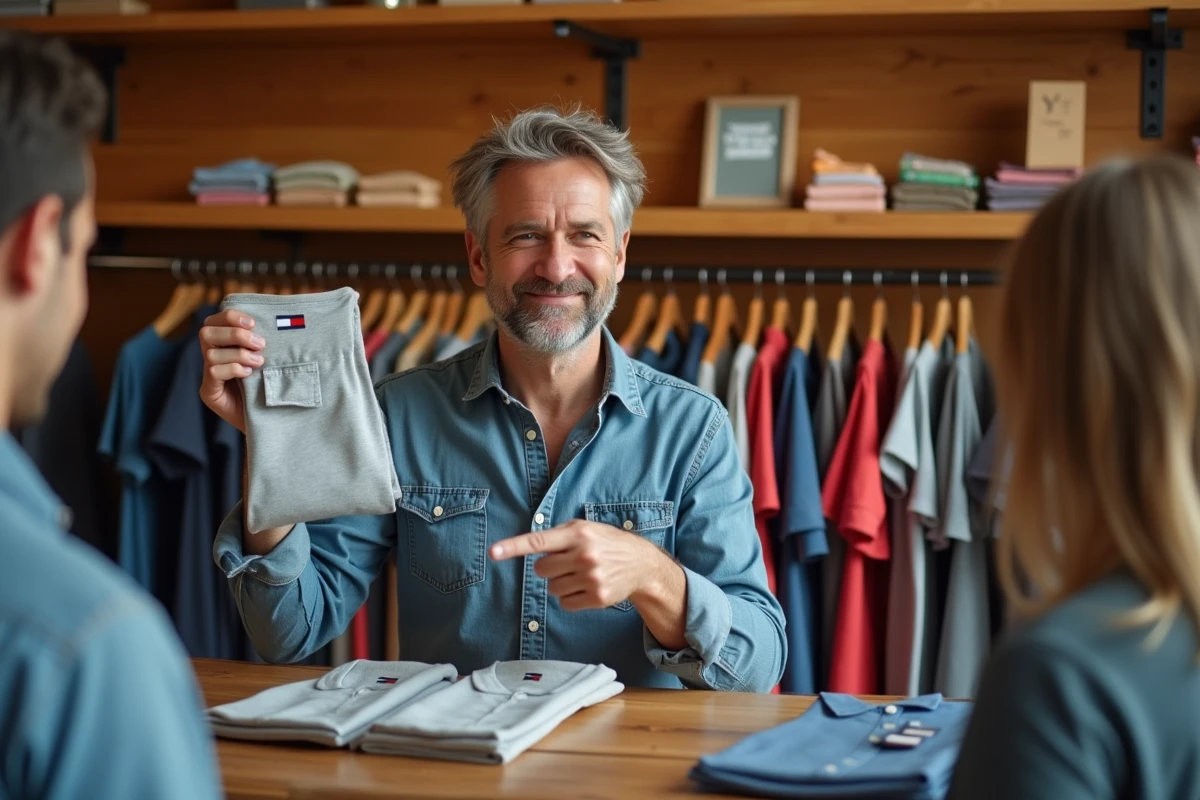
The Tommy Hilfiger store in Nantes, located on Franklin Street near the Opera, applies the same labeling rules as the rest of the European network. The regulation (EU) 2024/825 is binding there: each item must clearly state the final assembly country in a readable manner.
In practice, we recommend checking three elements on the inner label before purchase:
- The manufacturing country clearly mentioned (often “Made in Vietnam,” “Made in Bangladesh,” or “Made in India”).
- The presence of a functional QR code linking to a traceability page on the brand’s website.
- The fiber composition, which gives an indirect clue about the probable origin of the materials (certified organic cotton often comes from India or Turkey).
The characteristic preppy style of Tommy Hilfiger, with its polos, chinos, and down jackets, is found in ranges produced at various price levels. The manufacturing country does not always affect the retail price, as the brand’s margin absorbs the production cost differences between supplying countries.
The production geography of Tommy Hilfiger reflects that of most accessible premium brands: a massively outsourced manufacturing process, compensated by recent but still incomplete traceability measures. For the consumer in Nantes, the label remains the best verification tool at the time of purchase, provided one knows what it covers and what it omits.