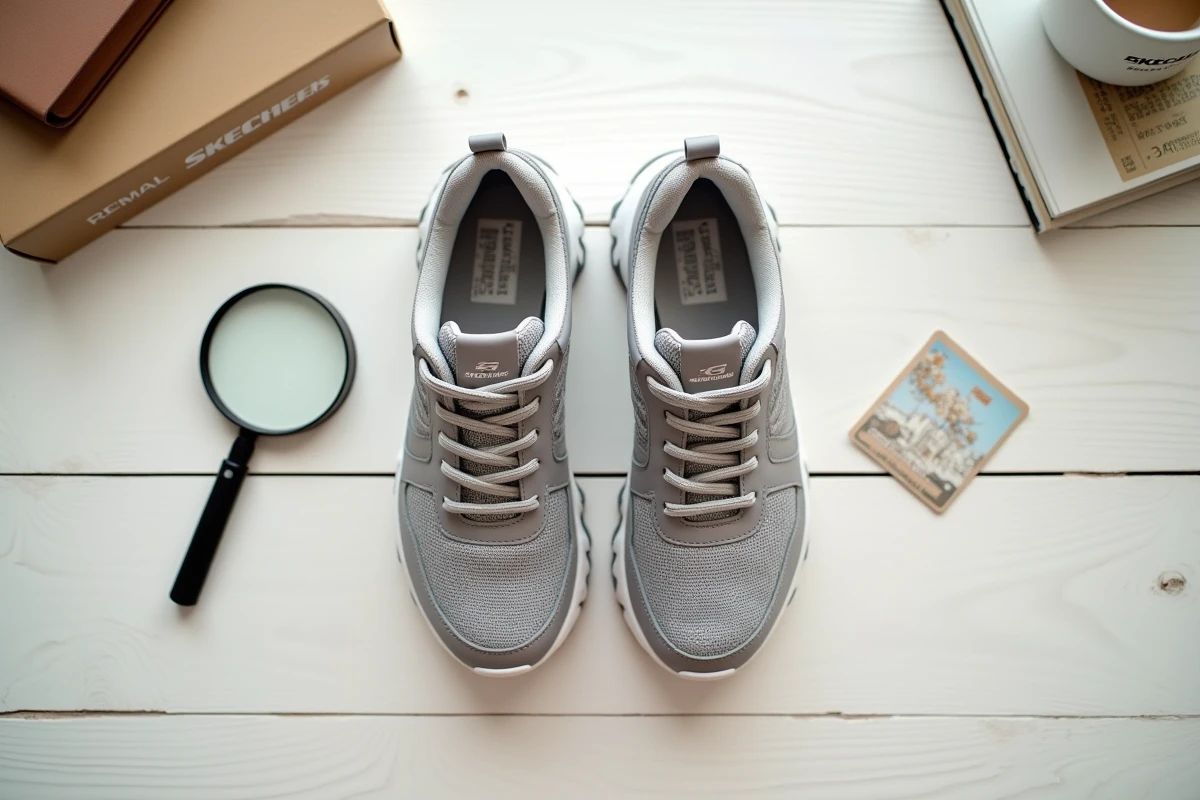
Skechers shoes are among the most copied brands in the athletic comfort segment. Identifying an authentic pair relies on a few precise technical checks that can be done without specific equipment. Knowing how to distinguish an original Skechers from a counterfeit mainly requires understanding the control points that counterfeiters often reproduce poorly.
Authorized Skechers Retailers: The First Anti-Counterfeit Filter
Before examining the shoes themselves, the question of the purchase channel resolves most cases. Skechers does not offer remote authentication services for products purchased on third-party platforms. The brand recommends purchasing only through its authorized retailers, listed via the store locator on the official website.
This point is rarely highlighted in anti-counterfeit guides, which focus on visual inspection. Buying from a retailer not listed by Skechers poses a real risk, even if the online store appears professional. To understand where authentic Skechers are made, one must trace the distribution chain and verify the seller’s status before examining the box or sole.
The official locator lists physical and online partners by country. A brand not on this list has no guarantee of direct supply from Skechers.
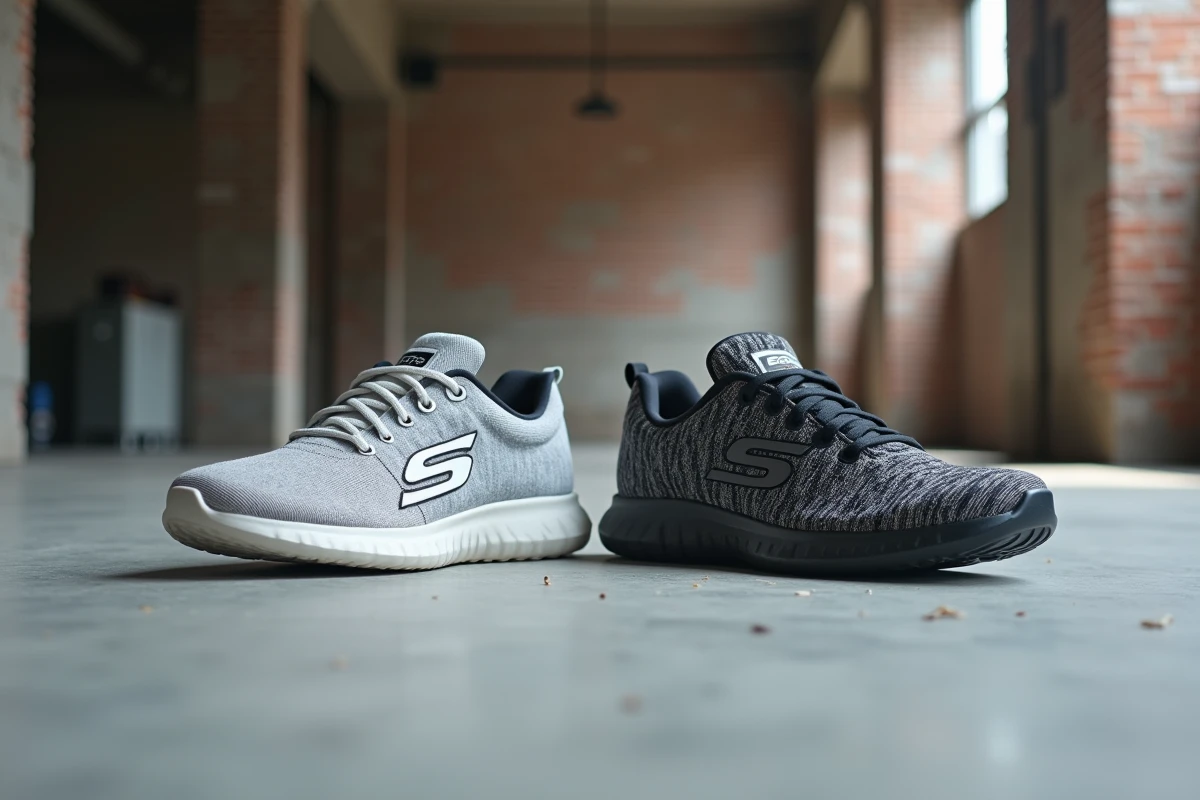
Inner Label and Serial Number: Technical Details to Check
The label sewn inside the shoe contains several pieces of information that counterfeits often reproduce with errors. Here are the elements to check first:
- The style number must exactly match the model displayed on the Skechers website. A quick search of the code can verify that it exists in the official catalog.
- The typography of the label should be clear, without smudges or misaligned characters. On counterfeits, the fonts subtly differ from those used by the brand.
- The country of manufacture mentioned on the label must be consistent with Skechers’ known production areas (mainly in Asia).
- The barcode, when present, must be scannable and link to a real Skechers product.
A label that easily peels off, printed rather than woven, often indicates unauthorized manufacturing. On authentic models, the label is securely attached and withstands several washes without deteriorating.
Compare the Number on the Box and on the Shoe
The reference number printed on the box must be identical to that on the inner label. A discrepancy between the two is a direct warning sign. Counterfeiters sometimes use recovered or generic boxes, which creates this inconsistency.
The original Skechers box also displays a color code, size, and barcode that align with the product. Any divergence between the box and the shoe warrants an immediate return.
Material Quality and Finishes: What Fakes Don’t Reproduce
The physical examination of the pair remains the most reliable test once the product is in hand. Skechers counterfeits exhibit recurring defects in three areas.
Sole and Memory Foam
The insole of models equipped with Memory Foam provides a slow and progressive rebound when pressed with a thumb. On a counterfeit, the foam is often stiffer or collapses immediately without elastic return. The difference is noticeable within the first few seconds of handling.
The outsole features regular and well-defined traction grooves. Rubber smudges or blurry patterns reveal off-circuit manufacturing.
Stitching and Bonding
The stitching on an authentic pair of Skechers follows straight and even lines, without protruding threads. The bonding between the upper and the sole does not show visible glue marks to the naked eye. On counterfeits, excess glue frequently appears at the junction of the sole and upper.
Skechers Counterfeits on Social Media: A Rapidly Growing Channel
Anti-counterfeit guides usually focus on dubious websites. Since 2023, reports from cybersecurity firms and brand associations have noted a sharp increase in counterfeit sales via social media. Facebook, Instagram, TikTok, and live shopping have become favored channels for selling counterfeit athletic shoes.
The operating method relies on ephemeral accounts that post aggressive promotions for a few days and then disappear. Dropshipping from unregulated warehouses complements the scheme. Two warning signs should alert you:
- A price significantly lower than the catalog price, often presented as a “flash sale” or “exclusive clearance.”
- The absence of legal mentions, a clear return policy, or a verifiable customer service number.
- A recently created seller account, with little history and reviews that seem artificial.
A purchase via a TikTok live or a sponsored Instagram story does not guarantee authenticity, even if the seller displays convincing photos. The visuals are often stolen from the official Skechers website.
Quick Verification of Skechers Shoes: Summary of Control Points
| Control Point | Authentic | Probable Counterfeit |
|---|---|---|
| Purchase Channel | Authorized retailer listed by Skechers | Unknown marketplace, social network, live shopping |
| Style Number | Identical on box and label, present in catalog | Absent from catalog or divergent |
| Inner Label | Woven, securely sewn, clear typography | Printed, peelable, irregular fonts |
| Memory Foam | Slow and progressive rebound | Stiff or immediate collapse |
| Stitching and Bonding | Straight lines, no visible glue | Protruding threads, excess glue |
The most reliable way to ensure the authenticity of a pair of Skechers remains purchasing from an authorized retailer. Visual and tactile inspection can confirm a doubt, but it does not replace checking the distribution channel. If in doubt about a pair already purchased, contacting Skechers customer service with the reference number and detailed photos remains the most direct approach.