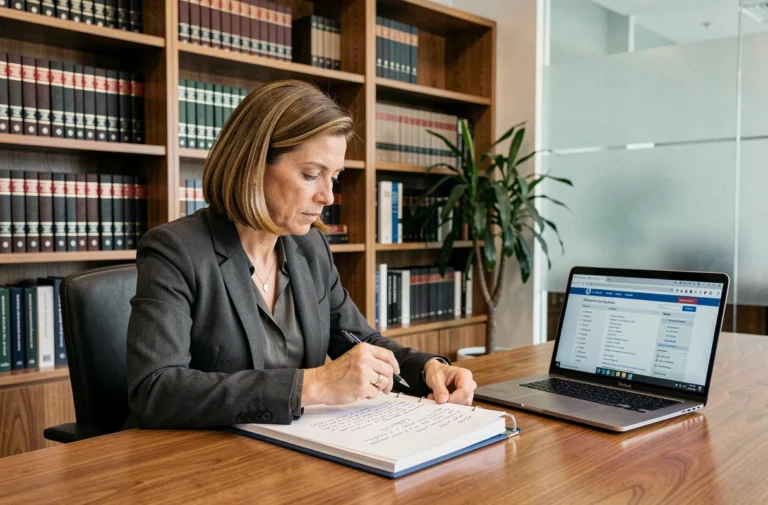
A web writer who optimizes their texts for Google without anticipating AI Overviews is already working at a disadvantage. Online visibility is no longer limited to ranking in the ten blue links: generative results reformulate, synthesize, and quote excerpts without necessarily driving traffic. Adapting one’s practice to this reality requires precise technical adjustments, not a complete overhaul of the profession.
Web Writing and AI Overviews: Structure to be Cited, Not Just Indexed
Google confirmed in 2026 that there is no specific optimization to appear in AI Overviews. The same SEO fundamentals remain crucial: content relevance, domain authority, E-E-A-T signals. No machine-readable file or proprietary markup guarantees a spot in generative responses.
What changes is the expected granularity. Content structured in short question-answer blocks at the beginning of sections gains visibility in these snippets. A standalone paragraph of two to three sentences that directly answers a question is more likely to be extracted than a long development where the answer appears in the fifth paragraph.
We recommend treating each H2 as a citable unit. The title poses the question or concept, the first paragraph delivers the concise answer, and the following paragraphs elaborate. This structure does not penalize traditional SEO and increases exposure in generative results.
For those who want to delve deeper into the mechanics of the profession, it is possible to learn more about The Web Writer and the skills they utilize daily.

Reducing Dependence on Traditional SEO Traffic: Alternative Channels and Formats
Relying entirely on Google organic traffic exposes one to structural fragility. An algorithm update or the expansion of AI Overviews in a topic can cause traffic to plummet overnight. Diversifying distribution channels is no longer optional for a web writer who wants to secure their business.
The newsletter remains the most predictable channel. Unlike SEO, the subscriber list belongs to you. Each send generates direct, measurable traffic, independent of algorithms. A writer who publishes a weekly article on their blog and summarizes it in a newsletter builds two parallel audiences.
LinkedIn functions as a second search engine for B2B profiles. Publishing native posts (not just simple links to a blog) allows reaching decision-makers who are not searching on Google. The carousel format or the long post with a technical stance outperforms traditional link sharing in terms of reach.
Formats to Favor for Multichannel Web Writing
- SEO-optimized blog articles with standalone question-answer blocks, usable by generative engines
- Native LinkedIn posts that synthesize a technical point in under 300 words, with a sharp angle
- Regular editorial newsletters that build loyalty with an audience outside search engines
- Collaborative content (interviews, guest columns) that strengthens the domain’s E-E-A-T signals
The logic is not to neglect SEO, but to build a direct audience that cushions algorithmic variations.
Legal Security of Content Against AI: What the Web Writer Needs to Know
The question of copyright applied to AI-generated or assisted content is not settled everywhere, but the French framework already provides some guidelines. The Intellectual Property Code protects original works bearing the imprint of their author’s personality. A text entirely produced by AI, without substantial human creative intervention, does not meet this criterion.
For a web writer using writing assistance tools, the technical recommendation is clear: systematically document the human contribution in the creation process. This means keeping intermediate versions, briefs, and manual modifications. In case of a dispute, this traceability demonstrates the authorship of the content.
The opposite risk also exists. If a generative engine reformulates one of your texts and disseminates it without attribution, the recourse remains limited in practice. However, the writer can strengthen their position by publishing their content with clear metadata (author, date, organization) and indexing it quickly.
Contractual Clauses to Integrate into Your Writing Services
We observe that the majority of web writing contracts do not mention the use of AI tools. An effective writer anticipates this point by specifying:
- The level of AI assistance allowed (research, reformulation, partial generation, or total prohibition)
- The transfer of economic rights on the delivered content, including a clause on exploitation by third-party AI systems
- The responsibility in case of content flagged as duplicated by an AI detection tool
A contract that ignores AI in 2026 is an incomplete contract. Both the client and the writer have an interest in formalizing these points before the first delivery.

Sustainable SEO Content Strategy: Beyond Keywords
The historical reflex of the web writer is to target a main keyword, place semantic variants, and wait for indexing. This approach still works, but it is no longer sufficient to build lasting visibility.
The E-E-A-T signals (Experience, Expertise, Authoritativeness, Trustworthiness) weigh increasingly in ranking. An article signed by an identifiable author, published on a domain that regularly addresses the topic, with verifiable sources, outperforms anonymous content stuffed with keywords. The thematic authority of the domain matters as much as on-page optimization.
Practically, this means publishing in clusters: a thorough editorial pillar surrounded by satellite articles covering related subtopics. The internal linking between these contents strengthens topical relevance in the eyes of search engines and generative systems.
An effective web writer does not just produce optimized texts. They design a coherent editorial architecture, legally secure their deliverables, and distribute their content across multiple channels. Technical mastery of SEO remains the foundation, but it is now part of an ecosystem where visibility also plays out in generative responses and direct audiences.