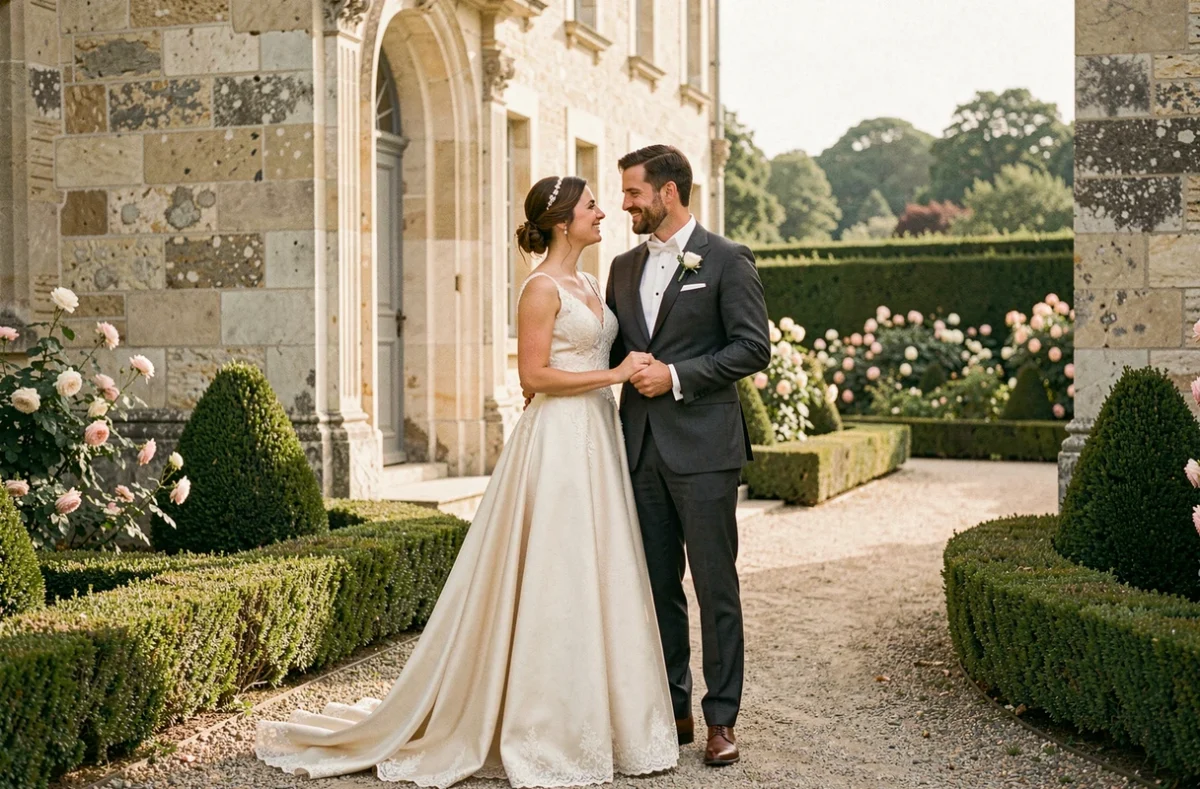
An elegant wedding is built on precise technical decisions, not on a long list of high-end vendors. The trend highlighted in Mariages.net’s 2026 report (1,304 couples married in 2025) confirms this shift: the average guest count is down compared with 2024, while spending per guest is rising significantly. Reducing the guest list to make the experience richer for each person is the clearest way to create a more cohesive celebration without blowing the budget.
Reception venue accessibility: the technical criterion guides overlook
A venue described as “accessible” in its listing is no guarantee. Regulations for establishments open to the public set standards for routes, rooms and restrooms, but exemptions are common in existing buildings. For a wedding, this can mean that a wheelchair user is unable to get past a step at the entrance to the ceremony room, even though the reception room itself complies with accessibility standards.
Check access at every stage: to the town hall (which is responsible for meeting its own accessibility requirements), the ceremony venue, the reception room, the restrooms and the parking area. Simply asking the venue owner is not enough. We recommend walking the entire route with the people concerned before signing.
- Check that doorways are wide enough and that there are no raised thresholds anywhere, including between indoor and outdoor spaces
- Confirm that at least one accessible restroom is located immediately near the reception room
- Provide a firm, stable path (paving slabs or a laid floor) if the ceremony is on grass or gravel, which can be difficult to navigate in a wheelchair or high heels
- Plan for bad weather: a tent without flooring on soft ground can become an accessibility hazard as soon as it rains
This accessibility audit helps avoid last-minute fixes (poorly secured temporary ramps, missing signs) that disrupt the flow of the day and, in turn, undermine its perceived elegance.
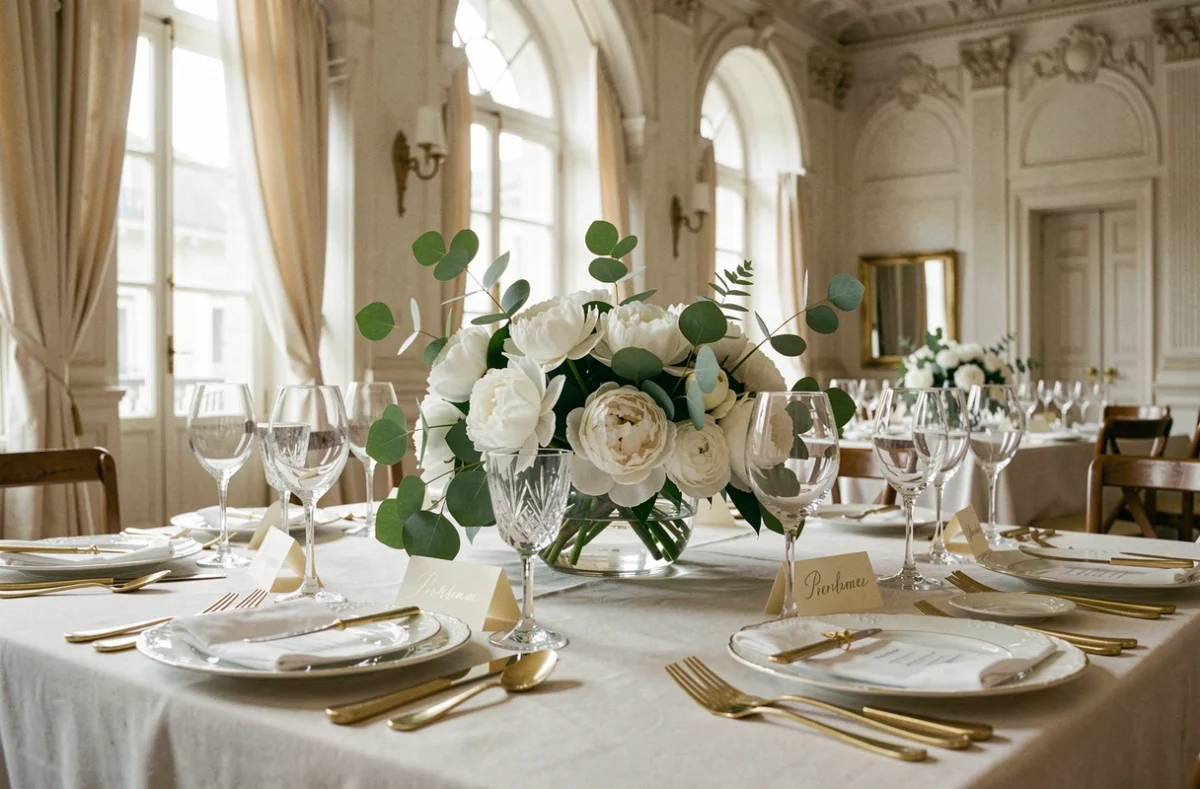
Choosing a wedding venue: balancing weather, comfort and cohesion
Autumn is increasingly becoming an alternative to July and August, particularly as couples look to avoid intense summer heat. This shift in timing changes what to look for in a venue: a property with no covered backup space may be perfect in June but risky in October.
An elegant reception venue is not simply one that makes the best Instagram photo. It is one that offers a seamless transition between indoor and outdoor spaces. In practical terms, the backup plan should not feel like a backup plan. If rain forces you to cancel the outdoor ceremony, the indoor space should be able to accommodate the same design without any obvious makeshift arrangements.
During your visit, walk through the full guest experience: arrival at the parking area, welcome drinks, ceremony, meal and evening reception. Each transition between spaces should take less than five minutes on foot, without passing through a service area or staff corridor.
Couples who choose a venue based solely on its main room often discover too late that the cocktail reception is held in a narrow lobby or that guests have to walk along a muddy path to reach the dance floor.
On La mariée de Sophie’s wedding website, venue listings detail these practical layouts, making it possible to narrow down your options before your first visit.
Wedding decor and color palette: create an identity, not a theme
The difference between a decorated wedding and an elegant one comes down to the color palette. Limit your palette to no more than three colors, and carry them through every element: stationery, table linens, flowers, lighting and the wedding party’s outfits. With more than three shades, the overall look can feel cluttered, even when each element is beautiful on its own.
The classic pitfall is the “Pinterest theme”: a mood board of thirty images taken from different weddings, with styles that do not work together. The result is a patchwork rather than a clear creative direction. A wedding designer takes the opposite approach: they start with the venue—its light, materials and proportions—and draw out a palette rather than imposing one on it.
Flowers and decor: where the price difference reflects a difference in approach
A low-cost floral quote lists flower varieties. A professional quote describes the volume, height and density of arrangements in each area. The question is not “which flowers?” but “what visual effect, and from what distance?” A dense centerpiece viewed from 30 cm has a very different impact from an airy arrangement visible from the other end of the room.
There is no single official label governing “sustainable weddings.” Instead, look at the florist’s actual practices: where the flowers come from, how unsold flowers are handled and whether arrangements can be reused. The requirement for producers to sort biowaste at source, in effect since January 1, 2024, also applies to caterers and professional florists.

Wedding vendors: coordinate rather than pile them on
A day-of coordinator is not a luxury; it is quality assurance. Without one, the responsibility for keeping everything in sync falls to the couple or their wedding party. The photographer, DJ, caterer and florist each work to their own timeline. A twenty-minute delay to the meal pushes back the cake, which delays the first dance and cuts into the evening reception.
The most useful vendor brief is the run sheet: a shared schedule, minute by minute, listing contacts, access details and setup and breakdown times. Finalize this document at least three weeks before the wedding.
Caterer and menu: match the service style to the reception format
A seated meal with table service requires a strict schedule. A cocktail-style dinner offers more flexibility but requires more staff on the floor. The format should be chosen based on the venue layout and guest count. With smaller guest lists (a 2026 trend), a seated meal is once again a viable option for mid-range budgets, since fewer guests make it possible to upgrade every plate.
The final detail that sets a well-planned wedding apart from a truly elegant one is the balance between the pace of the day and guests’ physical comfort. A twelve-hour day with no breaks, nowhere comfortable to sit during the cocktail reception and no accessible water station in hot weather will leave guests exhausted. And exhaustion takes the shine off everything else.