A foundation that feels tight, mascara that stings after an hour, eyeshadow that flakes off before noon: these issues often have nothing to do with application technique. The problem lies earlier, in the choice of products. Building a reliable makeup kit comes down to a few carefully selected products suited to your skin and routine, rather than an ever-growing collection.
Makeup for sensitive eyes: check the ingredients before you buy
Have you ever experienced eye discomfort after applying a new mascara or eyeliner? This type of reaction is common among people with sensitive eyes or a known allergy.
The usual first step is to look for the word “hypoallergenic” on the packaging. This means the manufacturer has formulated the product to reduce the risk of a reaction, but it does not guarantee that an allergic reaction is impossible. Only checking the INCI list (the full list of ingredients, which must appear on every package) can tell you whether it contains a potentially problematic ingredient.
If you know which allergen affects you (a preservative, synthetic fragrance or pigment), look for its name in the list. Ingredients are listed in descending order of concentration. An ingredient near the end of the list is present in a small amount, but that may still be enough to trigger a reaction in someone who is sensitized to it.
Fragranced products deserve particular attention. A previous reaction to a fragranced cosmetic can help guide your future choices: opting for formulas without added fragrance reduces a common risk factor. Explore the makeup essentials on Annuaire Beauté to learn more about building a well-suited makeup kit.
Complexion basics: foundation, concealer and sun protection
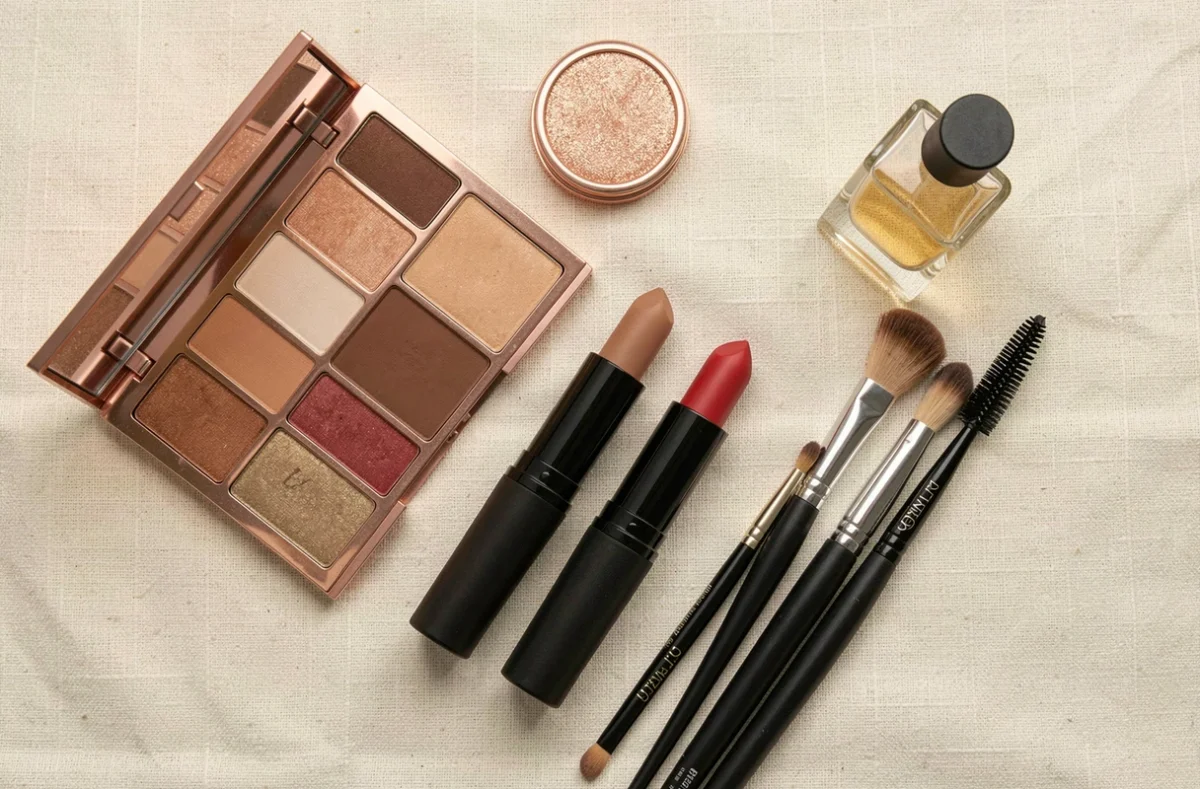
Your complexion is the foundation of any makeup look. Two products are all you need for a polished result: foundation and concealer.
Choose your foundation based on coverage
A lightweight foundation (often called a “tinted moisturizer” or “BB cream”) evens out your complexion without hiding your skin. A full-coverage foundation, on the other hand, conceals more imperfections. The right choice depends on the look you want, not on a universal rule.
Test the shade along your jawline, not on the back of your hand. The color should blend seamlessly into your facial skin, with no visible line of demarcation.
Sun protection under makeup
Foundation with SPF is no substitute for a dedicated sunscreen. The stated protection (SPF 15, 20 or 30) is only effective when enough product is applied—far more than the amount of foundation typically used. Applying a dedicated sunscreen under your makeup remains the most reliable way to protect your skin every day.
Concealer: a targeted ally
Use concealer on specific areas: dark circles, localized redness or small blemishes. Apply it after foundation, patting it on with your fingertip or a small brush. A shade slightly lighter than your foundation brightens the under-eye area. A shade that matches your foundation works better on blemishes.
Eyes and brows: mascara, eyeshadow and pencil
Your eyes are often the first thing people notice. Three products cover most eye makeup looks.
- Mascara lengthens and thickens lashes. For sensitive eyes, fragrance-free formulas without added fibers help reduce the risk of irritation.
- An eyeshadow palette with three or four neutral shades (beige, brown, taupe) lets you create both subtle makeup and more defined looks. Matte shadows are more forgiving of application mistakes than shimmery ones.
- An eyebrow pencil fills in sparse areas and defines your eyes. Choose a shade close to your natural brow color, never more than one shade darker.
Keeping brushes and applicators clean matters just as much as choosing the right product. Reusable tools used around the eyes collect makeup residue and bacteria. Cleaning them weekly (a gentle soap is all you need) reduces the risk of eye irritation and helps them last longer.
Lips, blush and powder: finish your makeup with just a few products
After complexion and eye makeup, three final products complete a functional kit.
Lipstick or tinted balm
A nude or rosy lipstick works for most occasions. For a more natural look, tinted balm hydrates while adding a hint of color. One lip product is enough for a basic makeup kit.
Blush: cream or powder
Blush brings life back to your complexion. Cream formulas blend easily with your fingers, making them a practical choice for beginners. Powder blush is applied with a brush and gives a more matte finish. Either way, apply it to the tops of your cheekbones, blending slightly upward toward your temples.
Loose or pressed powder
Powder sets makeup and mattifies the T-zone (forehead, nose and chin). Apply a thin layer with light pressing motions—never rub it in. Too much powder emphasizes fine lines and dries out the skin, so two light applications are better than one thick layer.
Refills and packaging: an emerging factor to consider
More and more brands offer refillable compacts, lipsticks and eyeshadows. The idea is simple: keep the case and replace only the pan or color stick, reducing packaging waste.
How practical this format is depends on two factors: whether refills are available (not all brands sell them everywhere) and how the case is designed. Check that refills are easy to find before committing to a refillable system.
Building a reliable makeup kit doesn’t take ten products—just the right ones. Foundation that suits your skin, concealer, mascara, a neutral eyeshadow palette, an eyebrow pencil, a lip product, blush and powder cover almost every need. Paying attention to ingredients, especially around sensitive areas like the eyes, does more for the final result than constantly adding new products.